




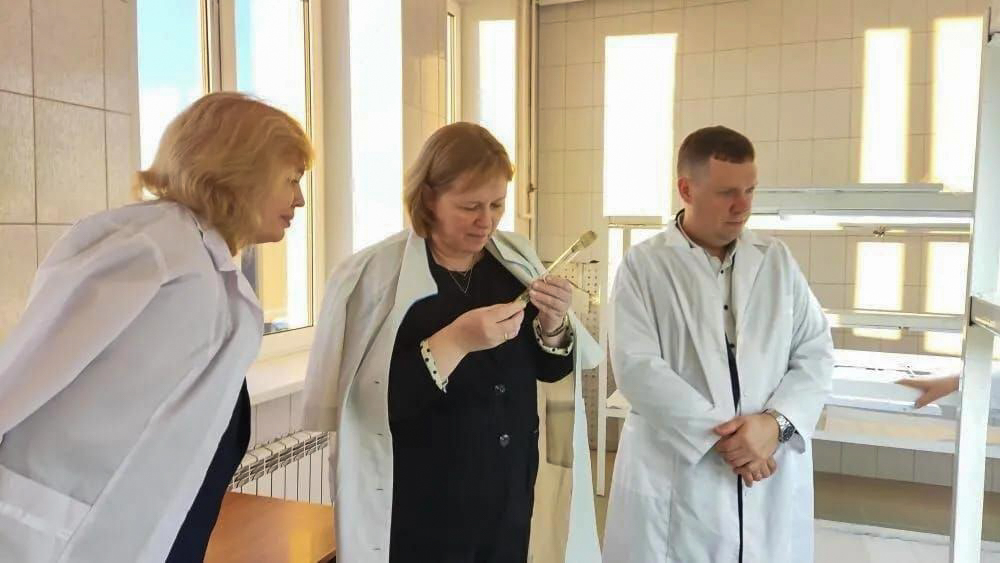
Vilga Laboratory of Agricultural Technologies, established on the basis of the Karelian State Agricultural Experimental Station, is an important actor in advancing agricultural science in the region. Its team conducts basic and applied research in priority areas of strategic importance for Karelian agriculture.
In particular, the Minister paid special attention to the scientists’ efforts in identifying potato and strawberry varieties that can adapt best to the conditions of Karelia, as well as other berry crops and medicinal plants.
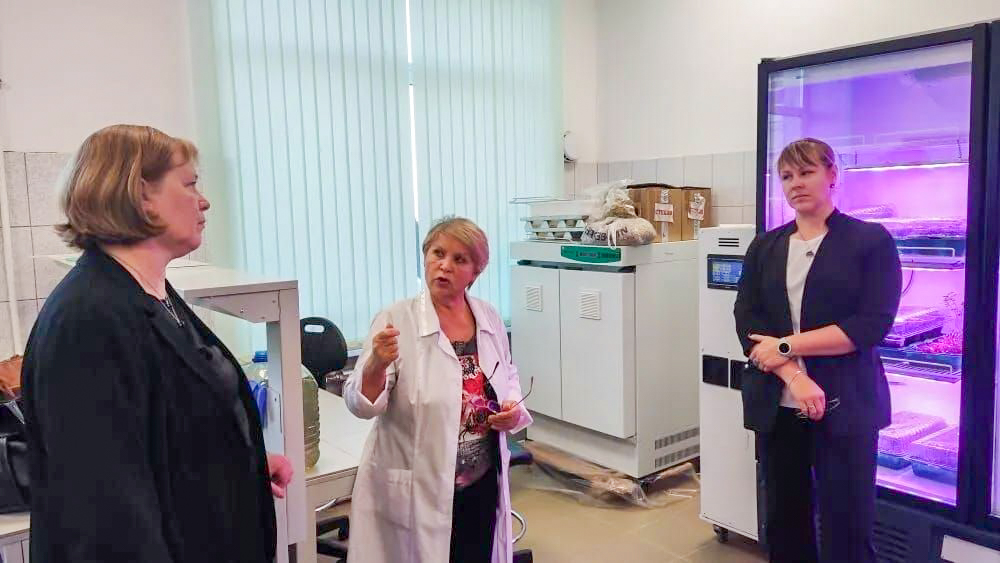
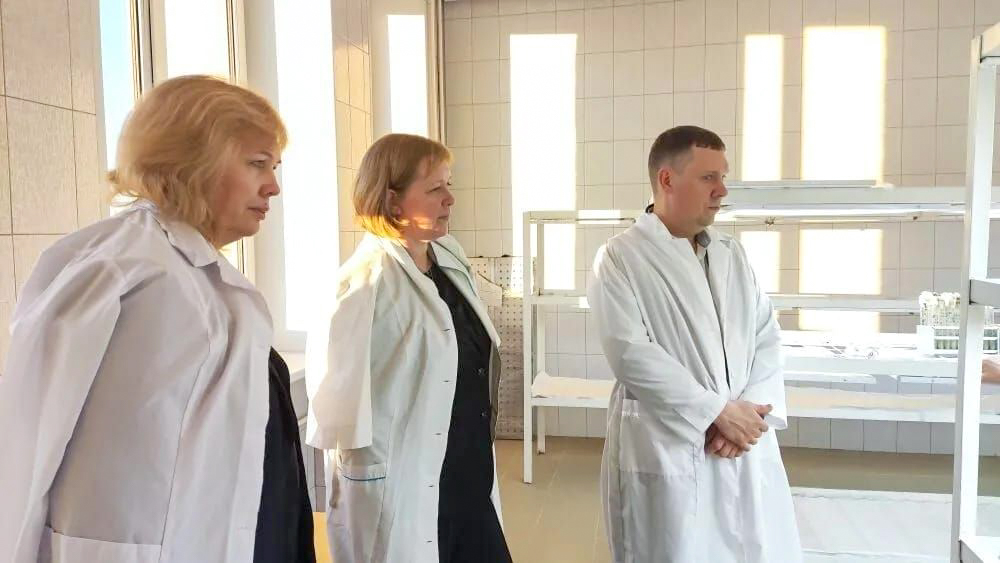
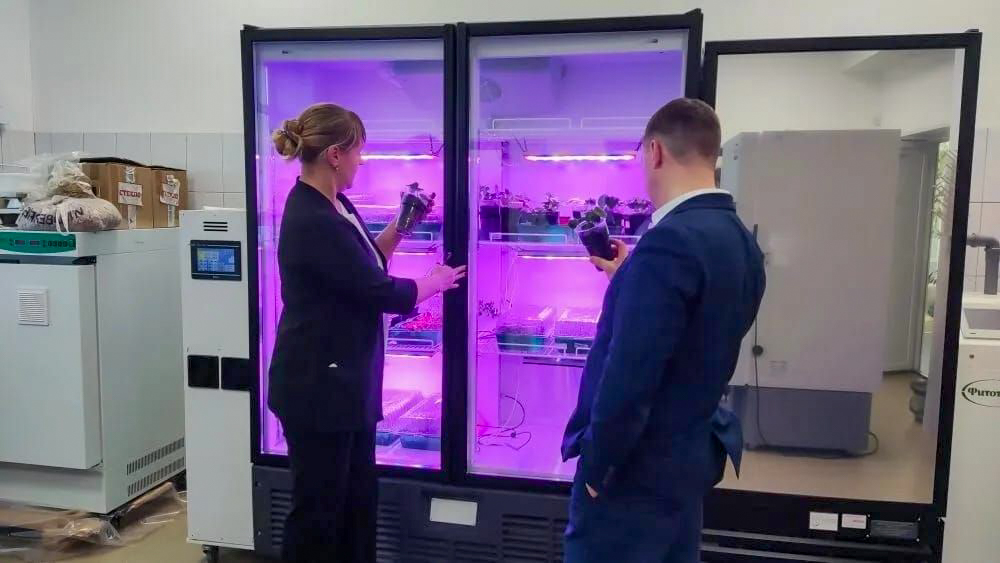
[i]Chief Researcher Lyubov Yevstratova and Junior Researcher Alexandra Kamova telling about the Laboratory of Agricultural Technologies
Previously, scientists have published the results of an agro-ecological assessment of potato varieties in Karelia. The crop productivity and ecological adaptability was determined for 11 varieties. The variety that stood out for its high plasticity and crop yield (29.8 t/ha) over the study period was Latona. Researchers have also investigated ways to improve potato cultivation performance in northern agriculture. They compared 20 early-, intermediate, and late-crop potato varieties to identify the most productive genotypes in the different crop maturity group for Karelia. Early crops, harvestable at northern latitudes 70 days after planting, were provided by Meteor variety.
Participants of the meeting discussed the laboratory’s work in the field of fodder production and the prospects for expanding the range of fodder crops in the region to raise grassland yields and improve fodder quality.
According to Head of the Vilga Laboratory Elena Dubina-Chekhovich, special focus in the discussion was on the need for closer networking with Karelian farms. It will help to rapidly implement scientific developments in agricultural practices and boost the performance of the region’s agriculture.
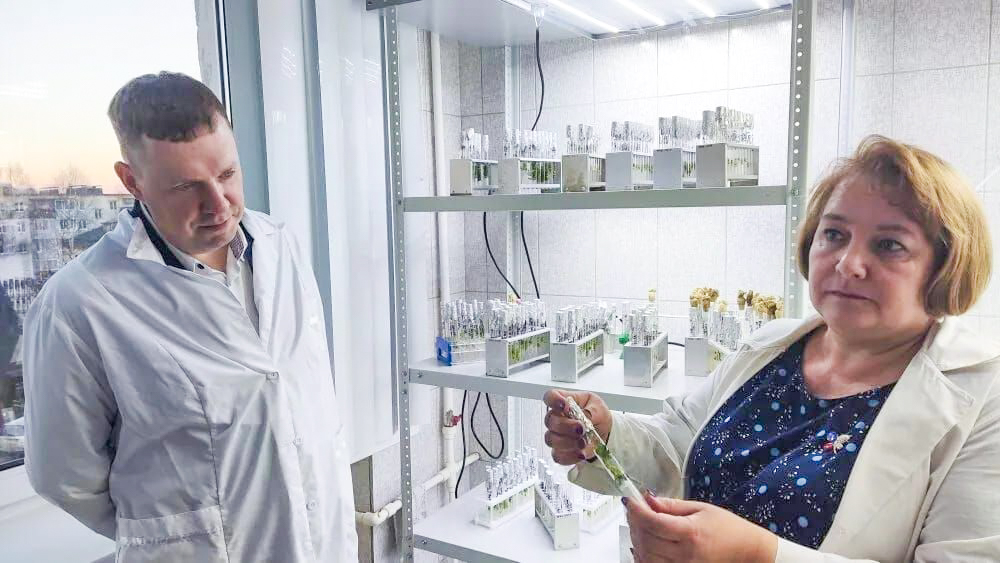
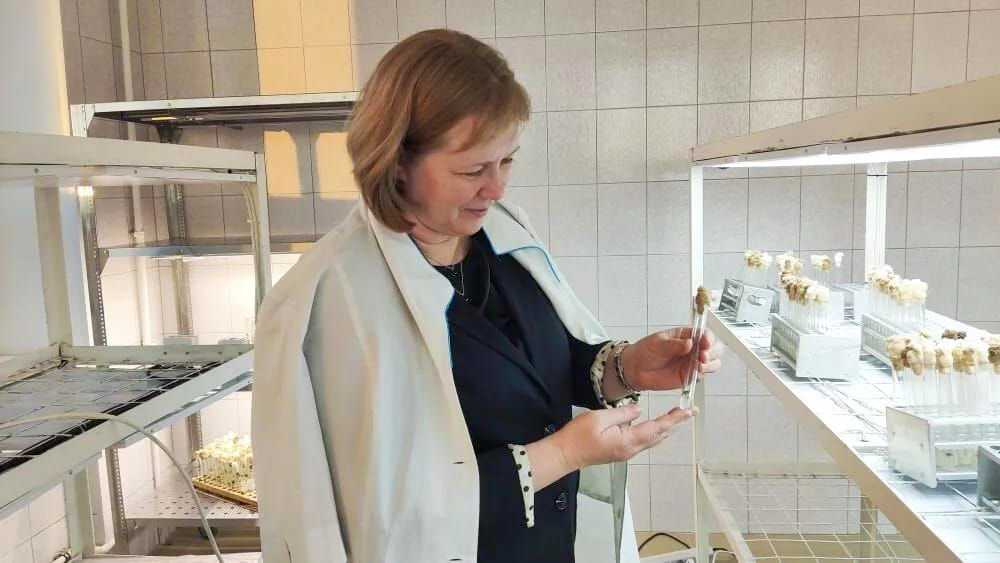
Head of Plant Biotechnology Laboratory DMR KarRC RAS Maria Yurkevich tells about the research results
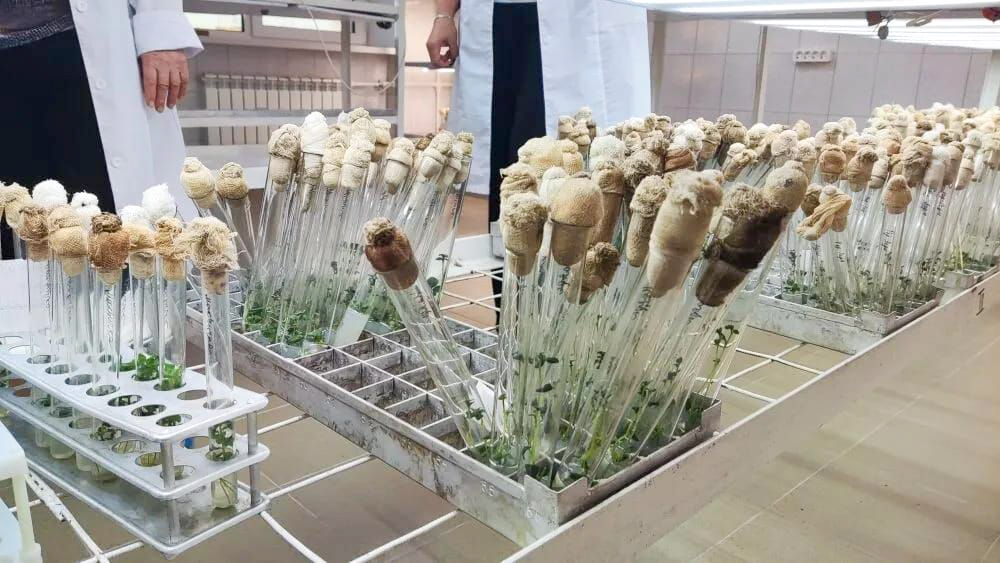
Vilga Laboratory of Agricultural Technologies works in close collaboration with the Plant Biotechnology Laboratory of DMR KarRC RAS. One of its research fields is integrated economic and biological assessment of berry crop varieties and development of technologies for intensified production of high-quality planting stock. The approach involves both vegetative propagation and clonal micropropagation of commercial berry and fruit plants. Currently, the laboratory maintains in vitro cultures of 10 blueberry honeysuckle varieties, 10 raspberry varieties, 2 dewberry varieties, and 3 Actinidia kolomikta (aka Arctic kiwi) varieties. Clonal micropropagation techniques help produce infection-free planting stock faster.
Another line of activity for this unit is studies on pulp-and-paper industry waste recycling. Recently, e.g., the specialists investigated how paper sludge from a pulp-and-paper mill can be applied when cultivating plants on lead-contaminated soil. The model plant was lettuce – an annual leaf vegetable. Their findings suggest that secondary paper sludge can help clean up such soils and reduce heavy metal toxicity for plants. This may be a clue to new methods of managing contaminated soil fertility. The results of the study were published in the international journal of Agriculture.
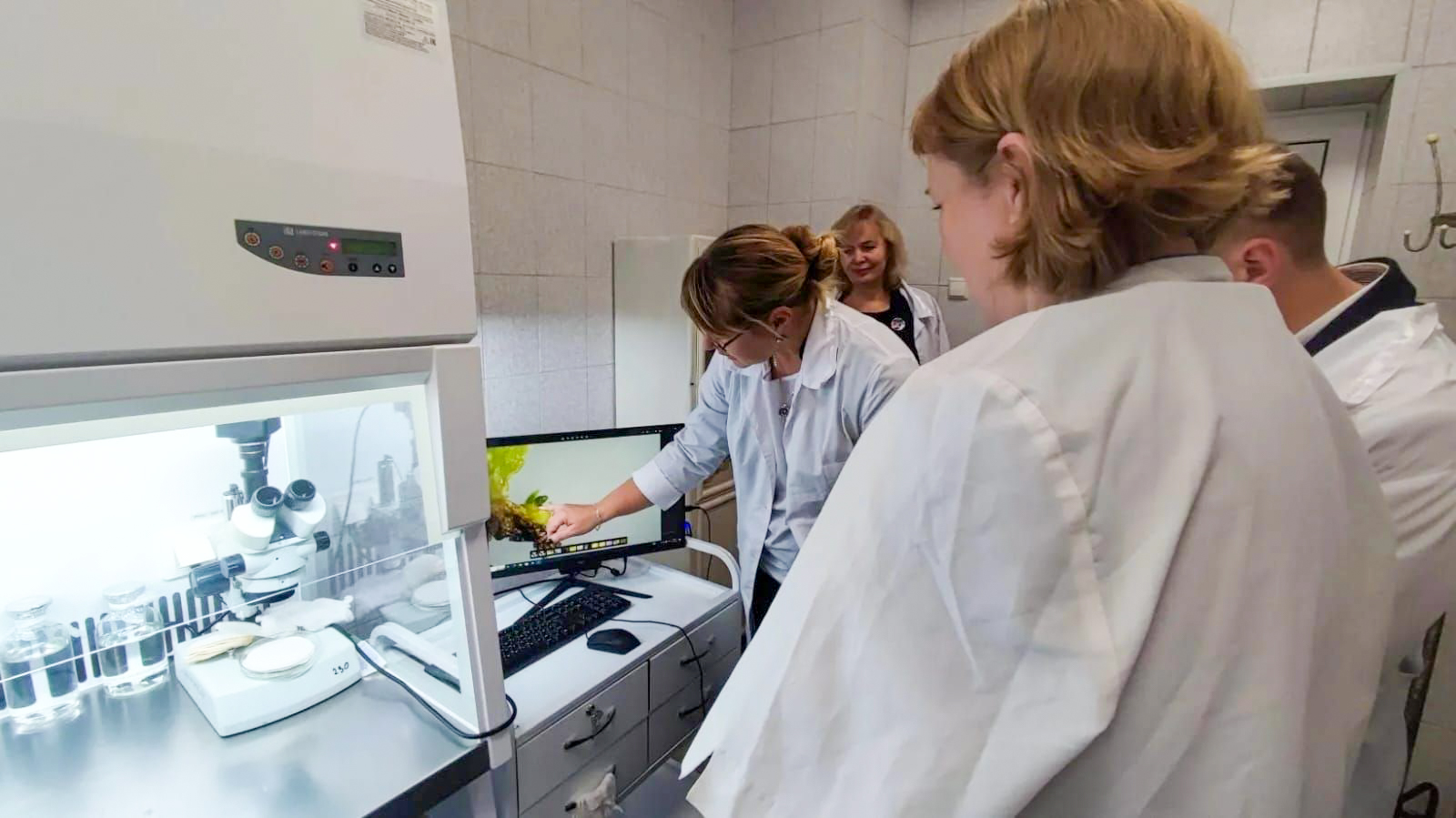
The group from the Ministry also visited the Laboratory for Monitoring Greenhouses Gases DMR KarRC RAS, where specialists work to quantify the carbon budget in natural and drained boreal wetland ecosystems of Northwest Russia.
“This working meeting highlighted the strategic significance of the studies carried out at the Karelian Research Centre RAS for the sustainable development of Karelia’s agricultural sector and affirmed the high standards of the scientific work done in the region”, – remarked Olga Bakhmet, recapitulating on the visit.