


On November 26-28, Federal Territory hosted the 5th Congress of Young Scientists, regarded as a key event of the national Decade of Science and Technology (2022-2031). The Congress served as the largest platform for dialogue between cutting-edge and basic science, government authorities, and the real sector of the economy. Participants were familiarized with a wide range of the latest scientific developments and networked with colleagues from other regions.
Notwithstanding the great diversity of topics, the plenary session and numerous events were united by the key theme of the Congress “Energy of Science: from Knowledge Potential to Creating the Future”.
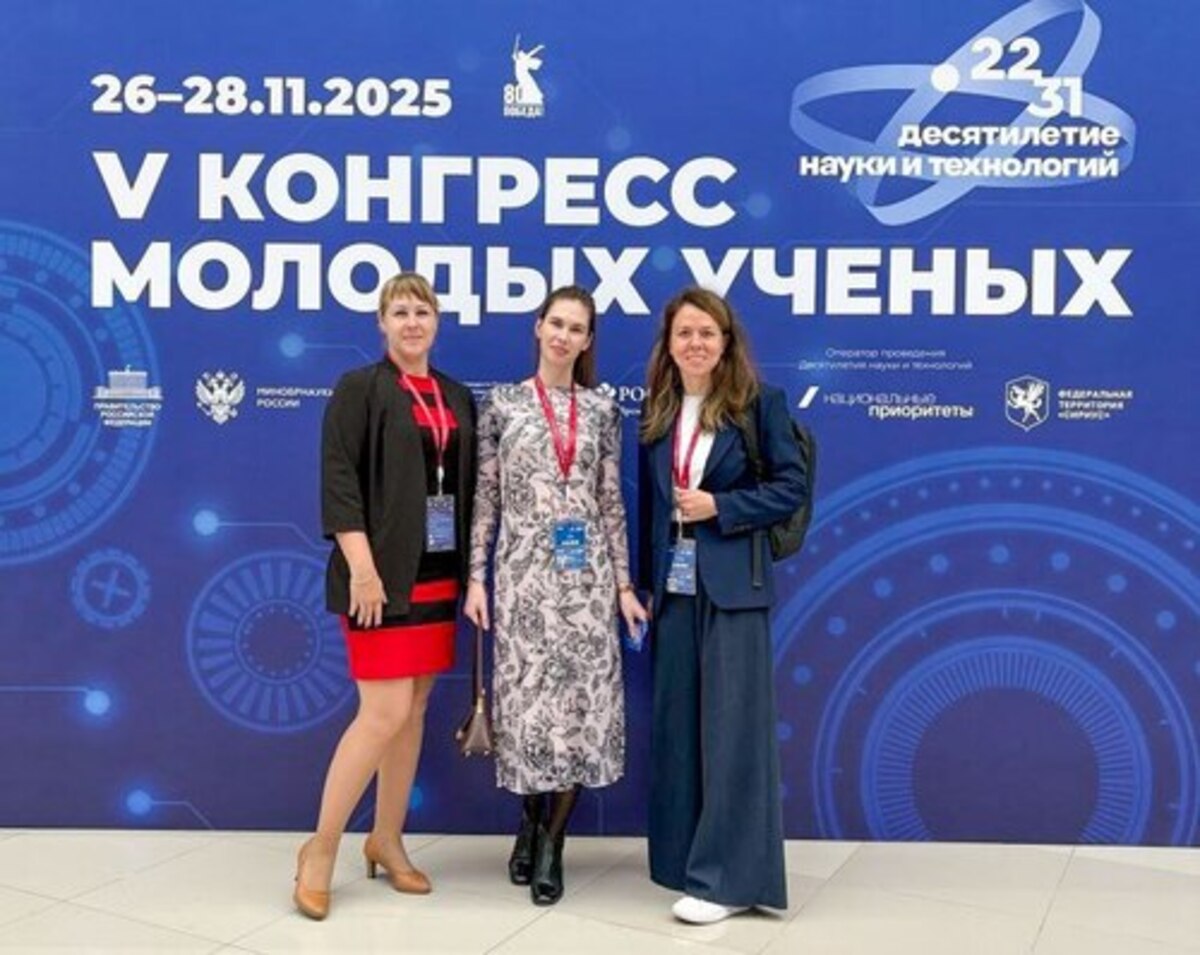
Karelian Research Centre RAS was represented in Sochi by Chairperson of the KarRC RAS Young Scientists’ Council, Senior Researcher at the Institute of Geology KarRC RAS Svetlana Egorova, Junior Researcher of the KarRC RAS Department for Multidisciplinary Research Alexandra Kamova, and Doctoral Student of KarRC RAS Institute of Biology Irina Zaitseva.
- The congress offered an extensive agenda, allowing each participant to find the topics they’re most interested in: from social support to young scientists and popularization of science to research grants, prioritized fields, and evaluation of scientific organization’s performance, - noted Svetlana Egorova, Chairperson of the KarRC RAS Young Scientists’ Council, Senior Researcher at the Institute of Geology KarRC RAS.
– The scope of the event, the age of the participants, and their achievements are impressive! It’s so nice to see the passion in the eyes of young scientists presenting their projects. The plenary and lecturing sessions addressed the crucial issues of food security, development of the agro-industrial sector, technological advancement, and AI solutions for scientific challenges, - added Alexandra Kamova.
KarRC RAS
in social media


in social media
News
November 28, 2025
Scientists of KarRC RAS took part in Young Scientists’ Congress at Sirius
A group of researchers from KarRC RAS took part in the 5th Young Scientists’ Congress held at the Sirius Federal Territory in Sochi. Over eight thousand participants from more than a hundred countries – early-career and renowned scientists, officials and businesspersons – worked actively at the plenary sessions and discussion grounds of this international scientific forum.
A group of researchers from KarRC RAS took part in the 5th Young Scientists’ Congress held at the Sirius Federal Territory in Sochi. Over eight thousand participants from more than a hundred countries – early-career and renowned scientists, officials and businesspersons – worked actively at the plenary sessions and discussion grounds of this international scientific forum.