


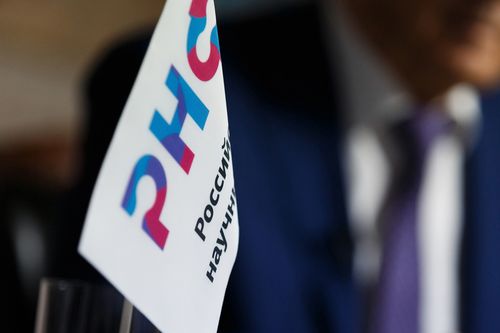
The Russian Science Foundation published the list of projects it will support following the 2025 grant competition for "Conducting basic scientific research and exploratory scientific research by small, independent research teams".
A total of approximately 5 000 applications were submitted for the competition, and 1 154 projects were granted support following expert review. The Russian Science Foundation informs that grants under the competition for small, independent research teams are allocated for setting up basic and exploratory scientific research in 2026-2027. The approved projects involve conducting research on topics new for the teams and forming new research groups. Funding per grant is up to RUB 1.5 million per year.
This competition is one of the most popular calls among Russian scientists. Some 6 000 applications are submitted each year. Announcing the call in May 2025, the Foundation declared that priority would be given to thematically novel projects with no research background but with potential for advancement.
The following project applications by KarRC RAS scientists were granted support:
“Developing a methodology for identifying, monitoring and conserving wetlands used as key overnight stopovers by Anseriformes on their spring migration through Karelia, with potential applications in ecosystem governance” (Artemyev A.V., Dr.Sci., Associate Prof., Leading Researcher, Zoology Laboratory, Institute of Biology KarRC RAS);
“Increased death rates in juvenile trout upon relocation from recirculating aquaculture systems (RAS) to natural water bodies: the role of microbiome composition” (Sukhovskaya I.V., Cand.Sci., Senior Researcher, Ecological Biochemistry Laboratory, Institute of Biology KarRC RAS)
“Assessment of anti-inflammatory properties of emerging natural dietary supplements for trout farming” (Kantserova N.P., Cand.Sci., Senior Researcher, Ecological Biochemistry Laboratory, Institute of Biology KarRC RAS; Senior Researcher, Biomedical Research Center, Department for Multidisciplinary Research KarRC RAS)
“Dating and rates of collisional and post-collisional exhumation of Lapland-Kola Orogen rocks” (Maksimov O.A., Cand.Sci., Researcher, Precambrian Geology and Geodynamics Laboratory, Institute of Geology KarRC RAS).
We congratulate the colleagues and wish them success in the research!
KarRC RAS
in social media


in social media
News
December 1, 2025
Russian Science Foundation supported Karelian scientists’ projects
Four grant applications submitted by scientists of the Karelian Research Centre RAS were approved by the Russian Science Foundation. The projects by Karelian researchers deal with issues such as building a methodology for the identification, monitoring, and protection of certain wetlands, increased mortalities among young farmed trout relocated to natural water bodies, assessing the anti-inflammatory properties of natural dietary supplements promising for trout farming, and reconstruction of the thermal history of the Earth's crust formation in northern Karelia and southern Murmansk Region.
Four grant applications submitted by scientists of the Karelian Research Centre RAS were approved by the Russian Science Foundation. The projects by Karelian researchers deal with issues such as building a methodology for the identification, monitoring, and protection of certain wetlands, increased mortalities among young farmed trout relocated to natural water bodies, assessing the anti-inflammatory properties of natural dietary supplements promising for trout farming, and reconstruction of the thermal history of the Earth's crust formation in northern Karelia and southern Murmansk Region.