




The core of the project was application of Salmo-3000 egg incubators. The device was designed and patented by the Laboratory of Fish and Aquatic Invertebrate Ecology of the Institute of Biology KarRC RAS. It serves the restoration of juvenile fish populations in Arctic rivers by creating an environment very similar to the natural settings in the salmon life cycle.
As ichthyologist Denis Efremov explained, wild populations of Atlantic salmon and brown trout have been steadily declining in Russia as well as worldwide, some of the reasons being overfishing and a growing number of amateur tourists getting access to the most difficult-to-reach water bodies owing to modern vehicles and equipment.
– Because of the long life cycle – 7-9 years from an egg to an adult fish, and the challenging migration pathways, populations cannot reproduce quickly in a natural manner. The need to develop and test new technologies for reproducing the fish fauna comes to the foreground, – the scientist remarked.
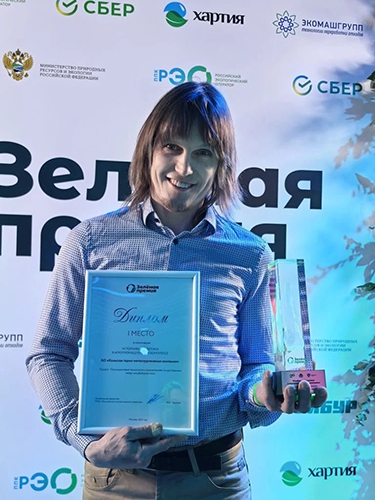
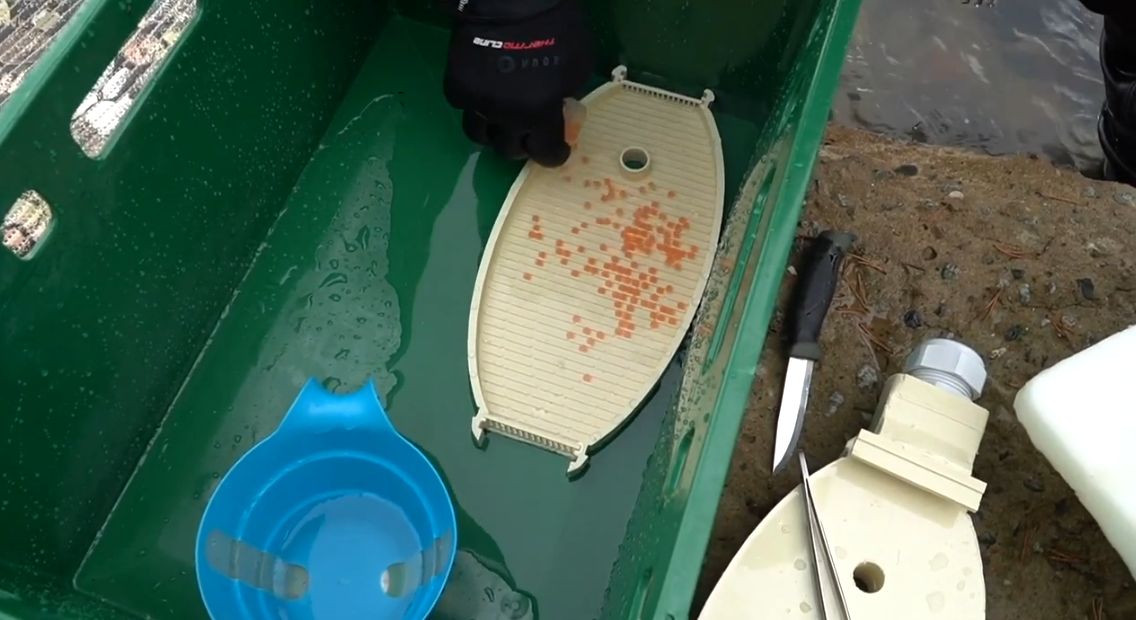
Denis Efremov, Senior Researcher, Laboratory of Fish and Aquatic Invertebrate Ecology, Institute of Biology KarRC RAS; Salmo-3000 artificial nest: a still from a video by the Russian Salmon Association
While implementing the winning project at the Moncha River, scientists and specialists from the KMMC incubated some 110 000 brown trout eggs. The average proportion of fry hatching from the incubators and recruited into the wild population was over 90%.
The high performance of the Salmo-3000 artificial incubators is also demonstrated within the program ”Restoration of Atlantic salmon stocks in the Umba River”, implemented by the Russian Salmon Association in collaboration with FosAgro company. It started in 2022. This summer, the installations were removed for the third time.
The experiment involves placing artificial Salmo-3000 incubators containing thousands of pre-fertilized eggs in the river in the fall. In the 2023 experiment, 20 incubators with 60 000 eggs were deployed. In 2024, two devices were damaged, but the emergence rate of fry from the 18 remaining nests was 82% (44 280 individuals).
– This figure is more than double that of the fry emergence rate from natural spawning, which is 25-30%. That is, the overall performance of Salmo-3000 devices in a full-cycle incubation technology is significantly higher. The devices, with minor modifications, can and should be recommended for use in the Moncha and Umba rivers and their tributaries, as well as in water bodies with similar hydrological regimes, – explained Denis Efremov.
In the past field season, ichthyologists continued working on both projects and also tried out a new modification of the device. The use of artificial incubators for restoring salmonid populations in northern rivers will continue next year.
Video: Nornickel VK page
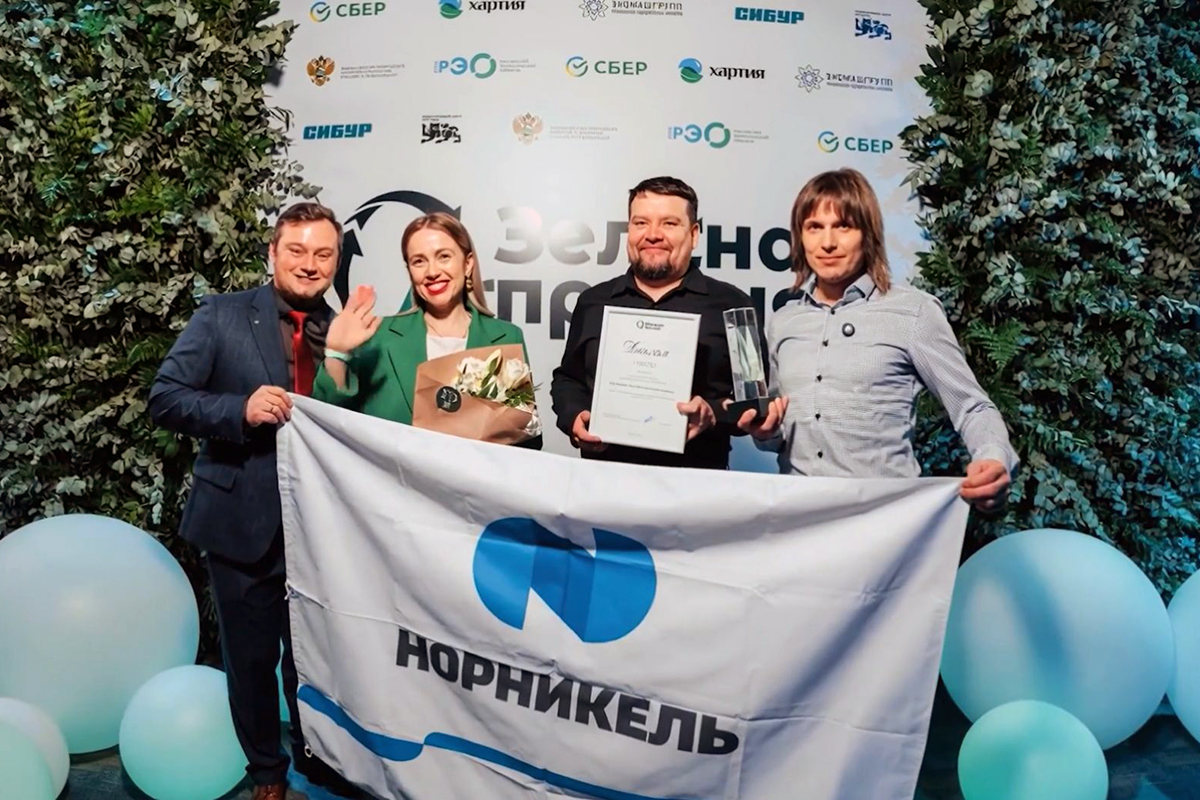
Congratulations to the winners of this prestigious award!